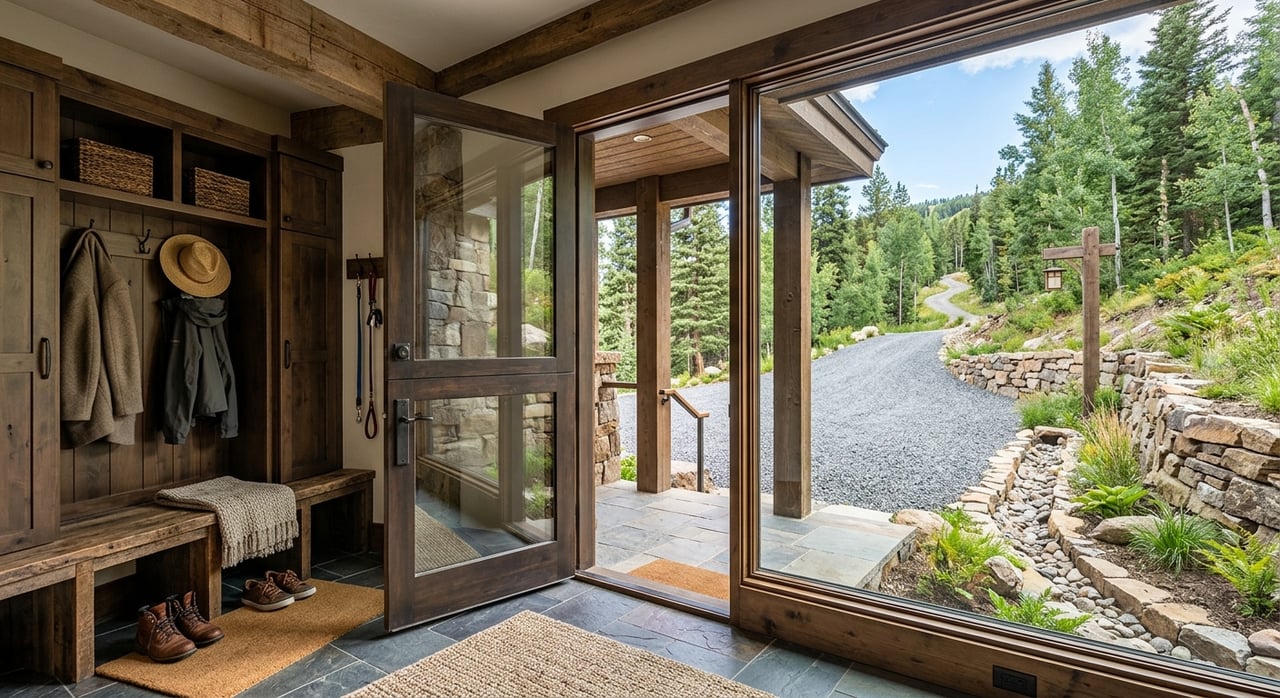
Blue Ridge Home Inspections and Due Diligence Checklist
July 9, 2026
July 9, 2026
Buying a mountain home in Blue Ridge can feel exciting right up until you realize how many details may sit behind the listing photos. A cabin’s water source, septic setup, road access, floodplain status, and inspection needs can all affect your decision and your timeline. If you want to buy with more confidence, this checklist will help you focus on the due diligence items that matter most in Blue Ridge and Fannin County. Let’s dive in.
Mountain properties often involve more moving parts than a typical in-town purchase. In Blue Ridge, a home may be served by city water and wastewater, a county community water system, or private systems such as a well and septic.
That is why your due diligence period matters so much. Georgia REALTORS® training materials describe it as your window to inspect, test, review, and decide whether to move forward before the deadline passes.
One of the smartest first steps is scheduling a general home inspection as soon as you go under contract. Consumer guidance from the CFPB recommends doing this early so you have time to review findings and complete any follow-up inspections if needed.
A general inspection is also different from an appraisal. The inspection looks at the home’s condition, while the appraisal is part of the lender’s process.
If possible, attend the inspection in person. The CFPB notes that being there can help you ask questions on site and better understand what the inspector sees.
In Blue Ridge, the general inspection is often just the starting point. Depending on the property, you may need additional inspections or records review to understand the full picture.
If public sewer is not available, the home will need an onsite septic system. Fannin County Environmental Health explains that wastewater must go either to public sewer or to an onsite septic system.
County building checklists also reference approved septic permits or sewage evaluations when required. If the home uses septic, ask for available permits, drawings, and any related records early in the due diligence period.
If the property is not on municipal water, it may rely on an individual well. The Georgia Department of Public Health provides guidance on non-public wells, including maintenance, sampling, and wellhead protection.
Fannin County Environmental Health also notes that a buyer may need proof that an individual well meets Georgia EPD drinking-water standards when the home is not served by municipal drinking water. In practical terms, you will want to verify the water source and ask what documentation is available.
Radon can enter any home, and testing is simple and relatively inexpensive. The EPA recommends testing in the lowest level of the home and taking action if results are 4 pCi/L or higher.
For mountain cabins with basements or lower levels, this can be an easy item to add to your checklist. It gives you more information before your due diligence deadline.
Mold and moisture deserve close attention in mountain homes, especially if you notice staining, musty smells, previous leaks, or damp crawlspaces. The CDC notes that mold cleanup depends on the amount of water damage and where the mold is growing.
That means any sign of ongoing moisture should lead to more questions. You want to know whether the issue was isolated, whether it was properly addressed, and whether conditions still exist that could cause it to return.
Do not assume every Blue Ridge property has the same utility arrangement. The City of Blue Ridge provides water and wastewater service to the city and parts of Fannin County, and the Fannin County Water Authority operates a permitted public community water system.
Some homes, however, may still depend on private systems. This is one of the most important details to confirm before closing.
A practical local clue from Fannin County Environmental Health is that if you do not see a sewer fee, the home is likely on septic. It also notes that if you do not have public water, you are more than likely on septic.
Still, treat that as a clue, not proof. Utility bills can help, but your final answer should come from permits, provider information, and county records when available.
Access can be a major issue in mountain transactions. Fannin County’s building checklist asks for exact directions and gate codes and may require a survey if one exists, a driveway permit for a new driveway connection to a county road, and floodplain notation or a site plan when required.
That tells you something important as a buyer: access is not a small detail. You want to confirm how the property is reached, whether access is straightforward, and whether any future improvements could require additional approvals.
A survey can help clarify boundaries, access, and site layout. If one exists, review it during due diligence.
This is especially helpful for larger parcels, steep sites, wooded lots, and homes where driveway placement or future plans matter. In mountain areas, assumptions about lot lines can create expensive surprises.
If a property may need a new driveway connection to a county road, Fannin County requires a driveway permit. If you are considering changes to access, rebuilding, or expansion, verify what would be allowed before closing.
The county also maintains right-of-way information on county roads through its land-development resources. That can be useful when you are trying to understand frontage, access, or future site planning questions.
Floodplain conditions should always be checked if the site or improvements appear near water or low-lying areas. Fannin County land-development resources reference FEMA flood map designations and flood-hazard mapping.
If a property falls within a flood-related review area, that can affect your comfort level, future plans, and permit path. It is far better to understand that before closing than after.
If the property is inside Blue Ridge city limits, county permit processing requires City of Blue Ridge approval first. County checklists also call for approved city water and sewer tap information, or approved septic if applicable.
This matters most if you are buying with plans to improve, rebuild, expand, or develop the property later. You should confirm permitability before closing rather than assuming future work will be allowed.
Fannin County’s checklist is clear that construction should not begin until a permit is approved and issued. For buyers, the takeaway is simple: verify first, then close with confidence.
Some buyers look at Blue Ridge cabins for personal use with the possibility of short-term rental income. If that is part of your plan, check county ordinances before closing.
Fannin County lists a short-term rental ordinance among its local regulations. Even if a property looks like a strong rental candidate, you should confirm the current local rules during due diligence.
In mountain transactions, timing matters almost as much as the checklist itself. Because one issue can lead to another, you need enough time to inspect, verify records, and make decisions before your deadline.
A practical sequence looks like this:
This sequence aligns with CFPB inspection guidance and Georgia REALTORS® contract training materials. It is a simple process, but it works best when you act quickly.
A mountain purchase usually calls for more than one professional opinion. Depending on the property, you may need licensed inspectors, surveyors, Environmental Health staff, and an attorney or closing professional for property-specific guidance.
The goal is not to make the process harder. The goal is to replace guesswork with verified information so you can make a strong decision based on facts, not assumptions.
Here is a simple checklist you can use during due diligence:
When you are buying in the North Georgia mountains, details matter. If you want a steady local advocate to help you navigate inspections, timelines, and property-specific questions in Blue Ridge, Char Stacy is here to help.
Stay up to date on the latest real estate trends.


From overseeing operational responsibilities to training new agents, she always has her team's best interests at heart. Work with Char Today!