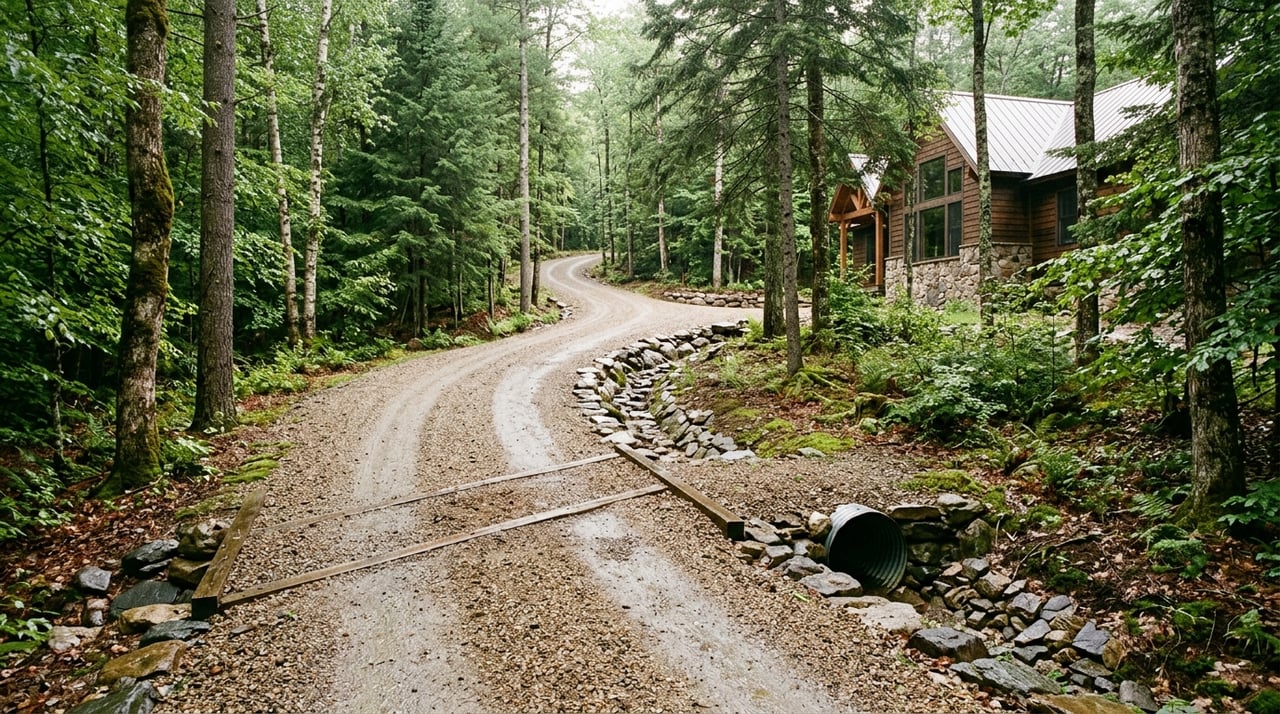
Ellijay Mountain Home Road Access and Privacy Guide
July 23, 2026
July 23, 2026
Buying a mountain home in Ellijay can feel exciting right up until one simple question changes everything: How do you actually get to the house every day? If you are dreaming about privacy, views, and that tucked-away cabin feel, road access and recorded property details deserve just as much attention as the porch or the mountain backdrop. This guide will help you look past first impressions so you can better evaluate roads, driveways, access agreements, and privacy before you buy. Let’s dive in.
In Ellijay and greater Gilmer County, road access is not a minor detail. It can affect your daily convenience, maintenance costs, guest access, and even how easily service or emergency vehicles can reach the property.
Gilmer County’s Road Department maintains and improves nearly 500 miles of county-maintained roads. At the same time, county rules make clear that private subdivision streets are not county-maintained, and upkeep belongs to the property owners under the applicable maintenance agreement or CCRs. That means you should never assume a mountain road is public just because it looks established.
Before you focus on finishes or views, ask who owns and maintains the road. A home can feel private and peaceful, but if the access road is privately maintained, you need to know who handles grading, drainage, resurfacing, and repairs.
This is especially important in the mountains, where road wear, runoff, and changing conditions can create more upkeep over time. Knowing the maintenance structure up front can help you avoid surprises after closing.
A county-maintained road usually offers more predictable public maintenance. A private road may offer a more secluded setting, but it often comes with shared responsibility and recorded obligations.
Gilmer County’s subdivision process requires plats to show whether streets will be dedicated to the county or privately maintained. The county also asks for private-road maintenance documentation when roads are not being dedicated, and roads proposed for county dedication may still go through inspections and a maintenance-security period before final acceptance.
If you are considering a mountain property, do not rely on appearance alone. A road shown on a plat is not necessarily already accepted as a public county road.
Instead, confirm:
In Ellijay, paved and gravel access can create very different ownership experiences. Neither option is automatically better, but each comes with tradeoffs that matter in mountain terrain.
A paved county-maintained route is often simpler for everyday use. It may be easier for regular commuting, deliveries, and guest access, especially when you want fewer maintenance concerns.
A gravel or dirt road may feel more secluded and natural. Still, unpaved access usually means more ongoing attention to surface condition, drainage, grading, and erosion control.
Road condition is about more than whether the surface is smooth today. Drainage plays a big role in how well a road or driveway holds up over time.
Research on gravel-road maintenance and roadway design points to drainage as a central issue. Poor drainage can lead to erosion, surface damage, and water problems that make access less reliable and more expensive to maintain.
If a property fronts a state route, the driveway is not just a private convenience. Georgia DOT treats driveway access as part of access management and requires permitting for work in state right-of-way.
Its guidance also notes that driveway design should transition smoothly from the roadway, with drainage compatible with the highway drainage system. In some cases, shared driveways can require a signed joint-use agreement.
If the home you like has direct access from a state route, it is smart to confirm permit status and understand whether any shared-use arrangement applies. That can affect future improvements, usability, and how access is documented.
A long mountain driveway may look dramatic in listing photos, but slope and layout can have a real impact on how the property functions. Steep or abrupt driveways can affect traction, water flow, and long-term maintenance needs.
Georgia DOT guidance makes clear that driveway grade and drainage matter, especially where the driveway meets the road. For buyers, that means you should evaluate more than curb appeal.
When you visit a property, consider how the driveway works for everyday life. You may be comfortable with a steep climb once in a while, but think about guests, delivery drivers, service providers, and moving trucks too.
A practical mountain home should work for more than one driver on a sunny afternoon. It should also make sense in regular day-to-day use.
In mountain settings, turnarounds are easy to overlook. They matter more than many buyers expect.
Gilmer County’s subdivision materials reference fire-access expectations, and county code includes turnaround standards for dead-end streets and cul-de-sacs. County land-use rules also require principal buildings to have frontage on a street that meets accessibility requirements.
If the home sits at the end of a long drive or on a dead-end road, think through how vehicles will enter and exit. A beautiful setting may still present challenges if there is limited room to turn around.
Ask yourself:
Privacy is one of the biggest reasons buyers shop for mountain homes in Ellijay. But true privacy is not only about what you can see from the porch.
It is also about what is recorded on the property. A home may look hidden from view while still being affected by a shared driveway, easement, right-of-way, or maintenance obligation.
Gilmer County’s plat review language expects key details to be shown, including buffers, setbacks, reserve strips, right-of-way widths, street surface types, and minimum lot width at the building site. Those items can shape both your privacy and your use of the property.
That is why mountain buyers should review the plat, deed, easements, CCRs, and any road-maintenance or joint-use agreements before making assumptions. The visual sense of seclusion does not always tell the full story.
When you are evaluating a property, try to confirm:
If you are buying a cabin or mountain home in Ellijay, a few targeted questions can go a long way. These questions can help you look beyond the listing photos and understand how the property may function long term.
In the North Georgia mountains, two properties with similar price points can feel very different once you understand the road and access picture. That is why mountain home buying often requires a close look at both the land and the paperwork.
When you have a detail-oriented local advisor, it becomes easier to spot the questions that matter early. That can save you time, reduce stress, and help you make a more confident decision about whether a property truly fits your goals.
If you are considering a cabin or mountain home in Ellijay, working with a responsive local expert can help you weigh privacy, access, and long-term usability with clear eyes. When you are ready to talk through properties and due diligence, connect with Char Stacy.
Stay up to date on the latest real estate trends.
From overseeing operational responsibilities to training new agents, she always has her team's best interests at heart. Work with Char Today!