Blue Ridge Land for Sale Guidance for Smarter Acreage Buys
May 28, 2026
May 28, 2026
Looking at land around Blue Ridge can feel exciting right up until you realize how many questions come with it. A beautiful tract may have mountain views, creek frontage, or total privacy, but that does not always mean it is easy to build on or simple to own. If you are thinking about buying acreage in Blue Ridge or greater Fannin County, this guide will help you evaluate the details that matter most before you make an offer. Let’s dive in.
Acreage around Blue Ridge is shaped by mountain terrain, water features, and recreation access in ways that can make one parcel very different from the next. The area is influenced by places like the Chattahoochee-Oconee National Forest, Lake Blue Ridge, the Aska Trail System, and Springer Mountain in Fannin County.
That local setting means land is usually judged on more than just price per acre. You also need to think about access, slope, privacy, water, buildability, and how close the property is to the outdoor features that draw buyers to the area in the first place.
Before you compare land opportunities, it helps to identify what kind of tract you are actually looking at. Around Blue Ridge, buyers often weigh wooded mountain acreage for a custom home, creekfront or river-adjacent land, ridge or view lots, lake-adjacent parcels near Lake Blue Ridge, and larger tracts that may also have timber or agricultural value.
Each type comes with a different set of pros, limits, and due diligence needs. A ridge parcel may offer long-range views but raise grading and driveway questions. A creekfront tract may feel ideal on day one, but flood review and buffer issues can become a major part of the decision.
One of the first things to confirm is whether the land sits inside the City of Blue Ridge or in unincorporated Fannin County. That one detail affects which office handles permits, land disturbance questions, subdivision review, and other development steps.
Inside the city, Blue Ridge requires building and development permits before grading or site work begins. The city planning process also includes separate applications for things like rezoning, subdivision plat approval, land disturbance permits, right-of-way abandonment, and zoning variances or certifications.
In unincorporated Fannin County, the county land-development office handles land disturbance permits, plat and subdivision review, and county-road right-of-way information. If you plan to build, divide, or significantly improve the property, this should be clarified early.
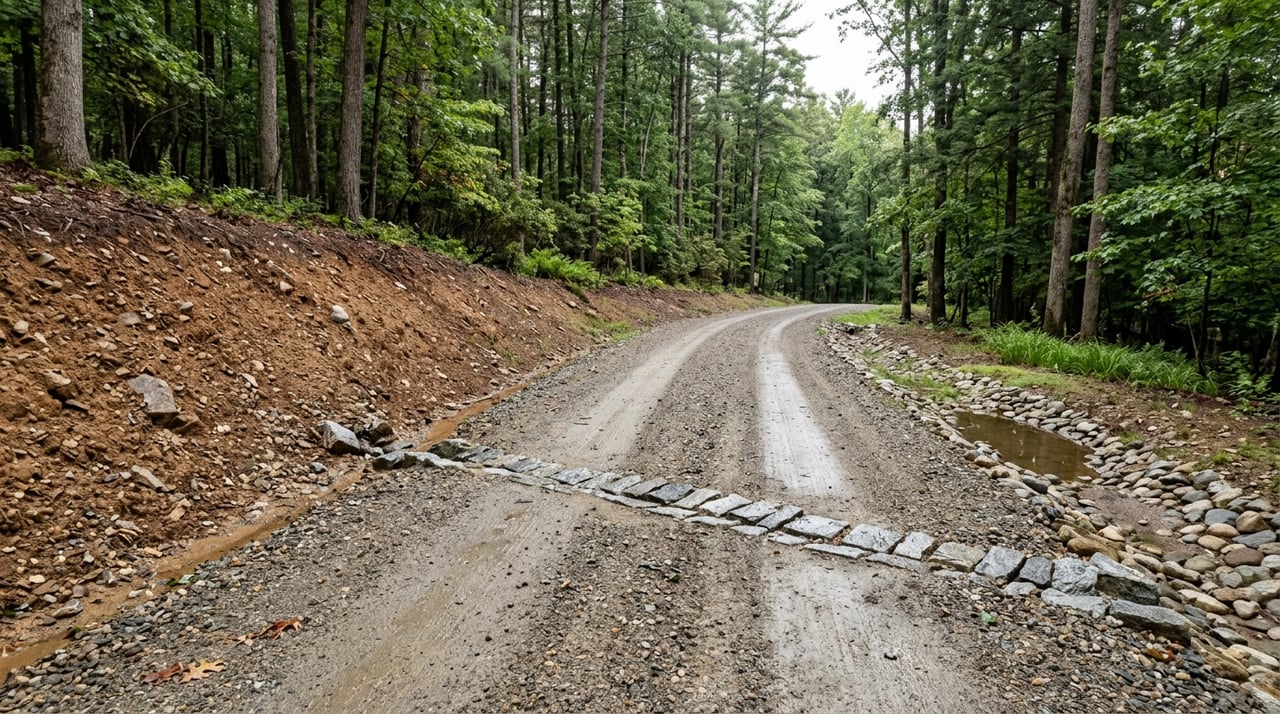
A land listing can look perfect online and still have access issues that change the whole deal. In Fannin County, driveway standards and E-911 addressing are handled through local ordinances, which tells you that access is not always as simple as seeing a road on a map.
You will want to understand how the property is reached, whether access is recorded, what kind of driveway may be allowed, and whether the parcel has the practical entrance you need for your intended use. For mountain acreage, this is one of the first filters to apply.
With raw land, boundaries and recorded rights matter more than many buyers expect. During due diligence, it is smart to order a survey and review the documents on record through the Fannin County Clerk of Superior Court, where deeds, plats, easements, liens, and related records are maintained.
A survey is especially important when boundary lines are unclear or the land is next to a waterway. It can help you verify what you are actually buying, where improvements may fit, and whether any easements or encroachments could affect your plans.
Ten acres that cannot support your plan may be less useful than three acres that can. When you evaluate land around Blue Ridge, buildability should carry as much weight as the total acreage number.
A practical review often includes the homesite location, slope, grading needs, usable area, driveway path, and any restrictions that could affect where you build. If you are buying for a custom home, a future cabin, or a small development path, those answers often matter more than raw size.
If the property will rely on an on-site sewage system, septic feasibility is a key checkpoint. Georgia Department of Public Health guidance says on-site sewage systems are permitted and inspected by the local county health department, and a soil analysis is required for property served by one of these systems.
That means you should not assume a parcel will support your building plans just because nearby properties are improved. The Fannin County septic permit process also notes that unauthorized alterations can void or deny a permit, so it is important to follow the approved path.
Private well placement deserves the same level of attention. Georgia guidance says wells should be located well away from septic components and not in flood-prone areas unless the casing extends above the highest known flood of record.
Creekfront, river-adjacent, and low-lying parcels can be appealing, but they need a closer look. FEMA’s Flood Map Service Center and National Flood Hazard Layer are the official sources for flood hazard information, and Fannin County also points property owners to flood map designations and related buffer and shoreline resources.
If a tract includes water features or sits near them, you should review flood exposure, shoreline conditions, streambank issues, and any local buffer considerations before you get too far into the process. This can affect both your building options and your long-term holding costs.
Raw land can carry lower overhead than an improved property, but you still need to model ownership costs carefully. Fannin County’s assessor information allows parcel searches and notes that property is assessed at 40% of fair market value, with property tax returns filed from January 1 through April 1.
The county also notes that preferential agriculture treatment is available in some cases. If you are comparing larger tracts, timber land, or land with a longer hold strategy, tax classification should be part of your analysis from the start.
In my experience, most land decisions come down to a short list of practical answers. Buyers usually need clarity on buildability, access, septic and well feasibility, flood zone status, and tax classification before they can judge whether a tract truly fits their goals.
If any of those pieces are still fuzzy, it is usually too early to feel confident about pricing or long-term value. This is especially true in a mountain market, where a property can be visually impressive but still limited in ways that matter.
In Georgia, a land purchase starts with a written offer and purchase agreement because land-sale contracts must be in writing. A contract typically covers the price, earnest money, closing date, due-diligence period, closing attorney, and title expectations.
The due-diligence period is often around 10 to 14 days, and this is when buyers usually line up the survey, title review, flood review, septic and well research, and any intended-use questions. If the tract is in the City of Blue Ridge or unincorporated Fannin County, this is also the stage when local planning or land-development questions should be addressed.
A typical closing may occur in about 30 to 45 days from contract, though land deals can take longer when survey, access, septic, or permit issues come up. In Georgia, a real estate closing must be handled by a Georgia-licensed attorney, which is one reason title and deed review are such an important part of the process.
Land transactions usually have more moving parts than buyers expect. The challenge is not only finding a parcel you like. It is getting the right answers in the right order so a manageable issue does not turn into a failed deal.
For Blue Ridge acreage, that often means coordinating with a surveyor, septic professional or soil specialist, local planning contacts, and the closing attorney. Having a managing-broker-level advisor who understands local process, timing, and negotiation can make the path much clearer, especially when you are buying from out of town or comparing several very different tracts.
If you are weighing land or acreage opportunities around Blue Ridge, the best next step is a practical one: look past the photos, define your intended use, and verify the details that affect value and usability. When you want local guidance with responsive communication and careful transaction management, Char Stacy is here to help.
Stay up to date on the latest real estate trends.

From overseeing operational responsibilities to training new agents, she always has her team's best interests at heart. Work with Char Today!