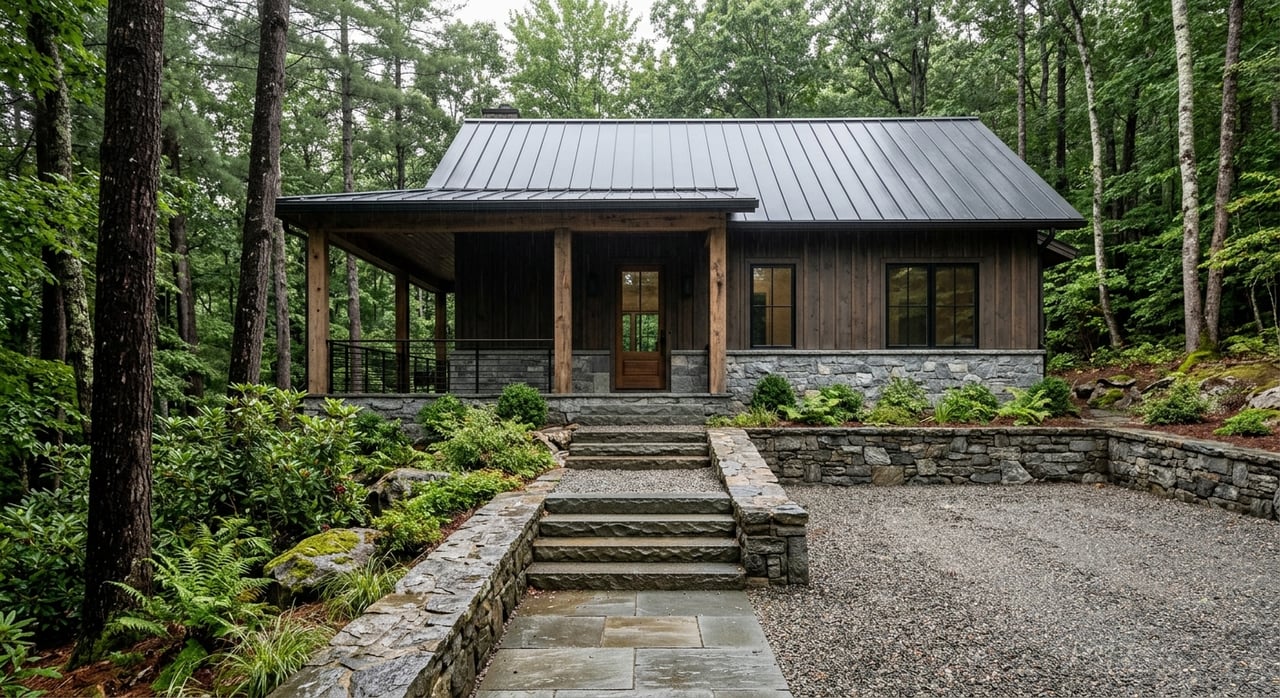
Blue Ridge Vacation Rental Cabin: What to Review Before You Buy
May 14, 2026
May 14, 2026
Dreaming about a Blue Ridge cabin that works as both your getaway and a vacation rental? It is an exciting idea, but in the North Georgia mountains, a great view alone does not make a great investment. If you are thinking about buying a short-term rental cabin in Blue Ridge, you need to understand the local rules, property access, operating requirements, and ongoing costs before you close. Let’s dive in.
One of the biggest mistakes buyers make is assuming all Blue Ridge-area cabins follow the same rules. They do not. The first thing you need to confirm is whether the property is inside the City of Blue Ridge or in unincorporated Fannin County, because each has its own short-term rental requirements.
Inside the City of Blue Ridge, a short-term vacation rental is defined as lodging for 30 consecutive days or less. New short-term rentals are limited to properties zoned Central Business District, also called CBD. The city also requires a short-term vacation rental certificate and an occupation tax certificate before the property can legally operate.
There is one important exception buyers should understand. Some city properties may have been operating as grandfathered nonconforming uses, but that status can end when ownership changes unless the property is zoned C-1 or C-2. In plain terms, a seller’s past rental history does not automatically mean you can keep renting the property after you buy it.
In Fannin County, the process is different. County properties fall under a separate lodging-tax and certificate system, and the current application packet requires items like the deed, local contact information, E-911 address markers, and a posted rental information sheet. The county also lists a $225 new-certificate fee, a $50 owner-transfer fee, and a $1,000 fine for renting without a certificate.
If you are buying a cabin that already has bookings, reviews, or a track record as a vacation rental, that information can be helpful. It can show you how the property has been used and marketed. Still, it should never replace legal due diligence.
In the city, the short-term rental certificate is not transferable to a new owner. A new application is required after ownership changes. That means you need to verify whether the use can continue after closing, not just whether it operated before.
This is one of those moments where details matter. Before you make an offer final, you want clarity on zoning, permit status, and whether the property qualifies under current local rules. A cabin can look like a turnkey rental on paper and still present major issues if the approvals do not carry forward.
Local approval is only part of the picture. If the cabin is in a subdivision, planned community, or condo development, you also need to review recorded covenants, HOA or POA documents, and any private rules that may affect short-term rentals.
Fannin County’s rental materials specifically point owners to community restrictions if applicable. That is a practical reminder that private restrictions can be stricter than city or county rules. Even if a local government allows short-term rentals, a neighborhood or association may still limit or prohibit them.
This is why community documents should be reviewed early, not at the end of the process. If rental income is part of your buying strategy, you want to know exactly what is allowed before you spend money on inspections, appraisals, and closing costs.
Mountain property has its own due diligence checklist, and road access is near the top. In Fannin County, Public Works notes that the county may not maintain private roads and provides resources related to road lists and driveway rules.
For you as a buyer, that means you should confirm whether the cabin sits on a public road, a private road, or a driveway served by an easement. You also need to understand who handles grading, repairs, and seasonal access. A beautiful cabin can become a lot less practical if the road is hard to navigate or expensive to maintain.
This matters for everyday use and for guest experience. If you plan to rent the cabin, you want guests to arrive safely and park without stress. Access issues can also affect service calls, turnover schedules, and emergency response.
Parking may not sound exciting, but it can quickly become a real problem if you overlook it. Blue Ridge zoning rules require off-street parking with vehicular access to a street or alley. For a single-family detached dwelling, the city’s residential parking table calls for two off-street spaces.
For a vacation rental cabin, practical parking goes beyond the minimum number of spaces. You should also look at whether vehicles can turn around easily, whether guests might block the road, and whether the site can handle the occupancy you plan to advertise.
In the mountains, driveway layout can affect safety, convenience, and neighbor relations. A property that feels fine for one owner vehicle may be much less workable for multiple guest cars over a weekend stay.
Emergency access is a serious part of mountain cabin ownership. Fannin County’s short-term rental materials require a 911 address, a local point of contact, occupancy limits, and emergency information to be posted in a visible common-area location. The county also emphasizes alerts related to flood, fire, severe weather, and other emergencies.
That should shape how you evaluate a property. You want to look closely at driveway condition, drainage, visibility of the address marker, and how easily emergency services can locate and reach the cabin if needed. These are not small details in a mountain setting.
A visible 911 address sign is also part of the city application requirements. If the property is hard to find after dark or during bad weather, that is worth addressing before it becomes a guest or safety issue.
A lot of buyers picture themselves figuring out the rental side after they close. In Blue Ridge and Fannin County, that can create problems fast. Both jurisdictions expect a real, reachable operator.
Fannin County requires a local point of contact who is available 24 hours a day, 7 days a week, and able to be on site within 2 hours. Blue Ridge requires a short-term rental agent who is reasonably available, can be reached by phone within 24 hours after city notice, receives violation notices, and monitors compliance.
If you are buying from Atlanta, Florida, or another out-of-town market, this is especially important. You need to know who will handle guest issues, emergencies, and compliance matters before the first booking goes live. Your operating plan should be part of your purchase decision, not an afterthought.
Occupancy is not just a marketing choice. It needs to line up with what the property can legally and practically support.
In Blue Ridge, the maximum occupancy listed on the application must match the number advertised to renters. In Fannin County, the short-term rental may host only the maximum number of overnight guests approved on the form. That means sleeping arrangements, mattress counts, bunk rooms, and parking should all be reviewed carefully before you buy.
This is one reason buyers should look past listing language and focus on the real layout. A cabin that sleeps a large number on paper may not be the best fit if parking is tight, septic capacity is a concern, or guest flow is awkward.
Running a vacation rental cabin also comes with paperwork and posting requirements that many first-time buyers do not expect. In Blue Ridge, owners must use an occupant agreement that requires guests to follow city, state, and federal law. The city application also asks for proof of ownership and a visible 911 address sign.
In Fannin County, owners must post a one-page information sheet in a common area. That sheet includes emergency instructions, the local contact, the nearest hospital name and address, occupancy limits, and county or community rules.
These requirements may sound simple, but they affect how smoothly your rental operates. Clear instructions, visible signage, and organized guest materials are part of staying compliant and reducing avoidable issues.
A vacation rental cabin is not just a purchase. It is an ongoing business operation with recurring filing and reporting duties.
At the state level, Georgia requires innkeepers to collect a $5 per night State Hotel-Motel Fee for each night an accommodation is rented. According to the Georgia Department of Revenue, cabins and short-term rentals managed through online marketplaces are included, and the fee generally stops once a stay reaches 31 consecutive days or more. To file, the seller must have a Georgia Tax Center sales tax number and a state hotel-motel fee number.
At the local level, both Blue Ridge and Fannin County require monthly reporting by the 20th of the following month, even if no rent was collected. Blue Ridge notes that late payments incur a past-due penalty. Fannin County also reminds owners that even if a platform like Airbnb or VRBO pays taxes, the owner is still responsible for entering the monthly reporting amounts.
The fees also differ by jurisdiction. Blue Ridge’s current materials show a $25 application fee and a $100 annual permit fee. Fannin County’s packet shows a $225 new-certificate fee and a $50 owner-transfer fee.
The penalties for operating without approval are worth noting too. Blue Ridge says unpermitted short-term rentals are subject to a minimum $250 fine. Fannin County’s packet says renting without a certificate is subject to a $1,000 fine.
A mountain rental has different wear points than a typical in-town home. Maintenance expectations should be higher, not lower, especially if the cabin will have frequent guest turnover.
Fannin County materials point to emergency preparedness and local operating requirements, and the county’s public works and building resources include a septic installation ordinance as part of the local framework. That does not mean every property has a septic problem, but it does mean septic capacity, drainage, road condition, and emergency access deserve careful review early in due diligence.
It is also smart to think about the cabin’s setup for ongoing use. Durable furnishings, easy turnover, simple storage, and practical maintenance access can make ownership much easier over time. In a high-turnover rental, resilience often matters more than delicate finishes.
Buying a Blue Ridge vacation rental cabin is not just about finding a beautiful property. It is about confirming that the property works for your goals under current local rules.
The Georgia Department of Community Affairs directs lodging questions to the city or county where the property is located. For buyers, that is a reminder to rely on local confirmation and to involve the right professionals before closing. A real estate attorney and a tax professional should review the property structure, permits, taxes, and any HOA or covenant restrictions before your offer becomes final.
The right guidance can save you time, money, and frustration. If you are buying from out of town or comparing several cabins, having a detail-oriented local advocate can help you spot issues early and move forward with more confidence.
If you are considering a vacation rental cabin in Blue Ridge, the best next step is to evaluate the property through both a lifestyle lens and an operating lens. The right cabin can be a great retreat and a strong fit for your goals, but only if the details line up. For local guidance, responsive communication, and hands-on help navigating the process, connect with Char Stacy.
Stay up to date on the latest real estate trends.

From overseeing operational responsibilities to training new agents, she always has her team's best interests at heart. Work with Char Today!